 Elo
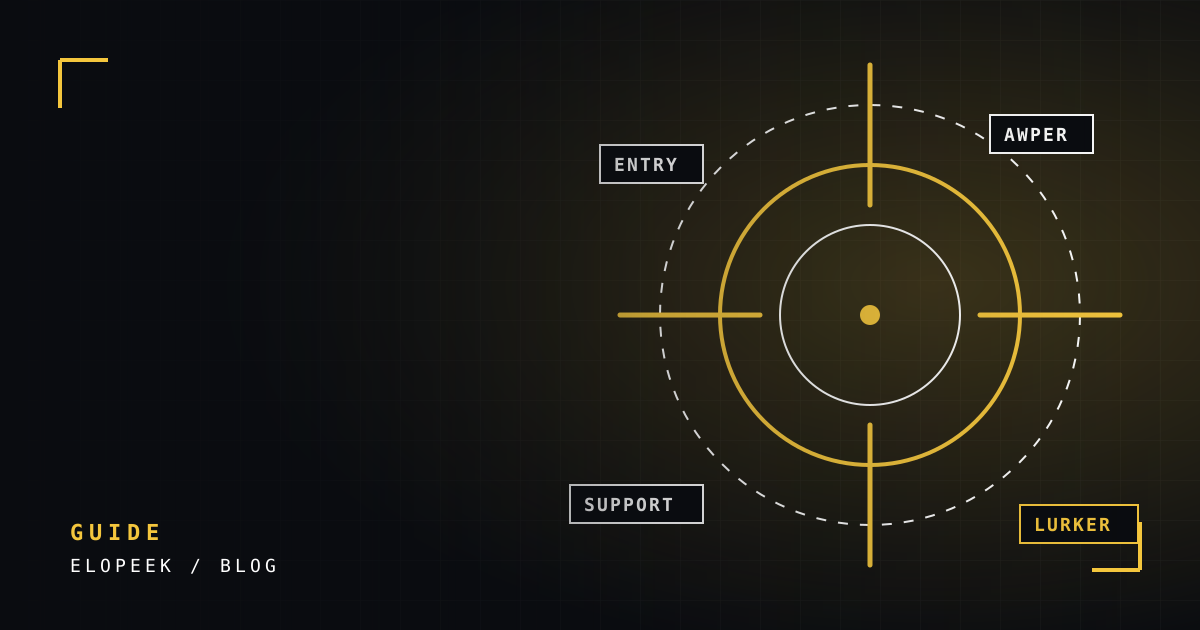
In professional CS2 teams everyone has a clear job. On FACEIT five strangers meet and roles usually form on their own. Knowing the roles helps you find your place in your team and predict how the opponent will play.
Entry fragger
The entry is the first player into a site. Their job is to make first contact and, ideally, get the opening kill. Even when they die, they win space and information for the team.
- Stat footprint: many opening duels, a K/D that can be slightly below average.
- If the opponent has one: expect aggression in the first seconds; utility on their entry path works well.
AWPer
The AWPer is the team's sniper. They hold long angles and slow the enemy down with one-shot kills. It is an expensive role, so teams often save money for their AWPer.
- Stat footprint: high K/D, less damage per kill, usually a low headshot percentage.
- If the opponent has one: smoke off long angles and flash before entering the AWP's area.
Support
The support throws flashes, smokes and molotovs for teammates and often anchors a site alone. They rarely top the scoreboard but they hold the team's structure together.
- Stat footprint: below-average kills, high flash assists and utility damage.
- In your team: if nobody wants to play support, taking the role raises your team's chance to win.
Lurker
The lurker moves away from the team to sneak behind the enemy or cut off rotations. The role needs timing and patience.
- Stat footprint: late-round kills, many clutch attempts.
- If the opponent has one: check behind you after taking a site; keep an eye on rotation paths.
Rifler
A rifler is a flexible rifle player without a narrow specialty. They support the entry when needed or hold a site. Most FACEIT players fit this category.
IGL (in-game leader)
The IGL plans rounds and makes economy decisions. FACEIT teams rarely have an official IGL, but one player taking over communication usually makes a team more consistent.
Why role knowledge helps on FACEIT
- It prevents overlap: five players all wanting to entry leads to messy rounds with no utility.
- It helps you predict the opponent: knowing they have an aggressive AWPer changes your early-round plan.
- It shapes the veto: some maps reward AWPers, others reward close-range players.
How are roles estimated?
A role is not read from one number but from several together: K/D, average kills, headshot rate, opening duels and weapons used. EloPeek looks at these numbers from players' recent matches and shows an estimated role (rifler, support, lurker and so on) directly on the player card. It is a statistical estimate, not a certainty, but it is a good starting point before the match begins.